Market Intelligence Platform
How do you build a system that gives a company unparalleled market insight while driving profitability? That was the question I set out to answer when designing a Market Intelligence Platform for a retail and ecommerce company. The goal wasn’t incremental improvement — it was to fundamentally change how the business made decisions.
The problem
Retail and ecommerce companies often struggle with data spread across multiple systems. For this company, valuable information about pricing, sales, inventory, and adoption rates existed — but in silos. The problem wasn’t a lack of data. It was a lack of accessible, actionable intelligence.
Probabilistic demand forecasting
Most retailers predict demand based on historical averages. But the future is probabilistic, not deterministic. I designed a forecasting model that calculates probabilities for different outcomes — for each product, the likelihood of selling a given quantity at various price points. Instead of asking “How many units should we stock?” the company could ask “What price and quantity combination gives us the highest expected return?”
Supply tracking
Supply is often the forgotten half of the equation. The platform tracks supply dynamics at every level — inventory in warehouses and stores, listings on external marketplaces, and competitor activity. This holistic view allowed analysis of product lifecycles, identification of supply shocks, and optimized inventory allocation. We could predict when a new product would saturate the market or when competitors were likely to run out of stock.
Automated trading strategies
The platform doesn’t just analyze data — it acts on it. By combining demand probabilities and supply insights, the system executes automated trading strategies. If the market signals an opportunity to buy low or sell high, the platform acts instantly — far faster than human decision-makers. This automation extended to inventory allocation, constantly recalibrating stock levels across channels to maximize ROI.
Asset valuation
One of the most innovative features is the platform’s ability to calculate market values for higher-level entities — the value of a multi-year supplier contract, the ROI of one channel versus another, or the market value of total inventory. This let the company treat inventory as a collection of assets with known values and even explore financial instruments like futures and options.
Risk analysis
Retail is full of uncertainty. The platform introduced a risk analysis layer to quantify and mitigate these uncertainties. By assigning probabilities to different outcomes, the system provided confidence intervals around every decision. It tracked price volatility and flagged products with high risk of obsolescence.
The dashboard
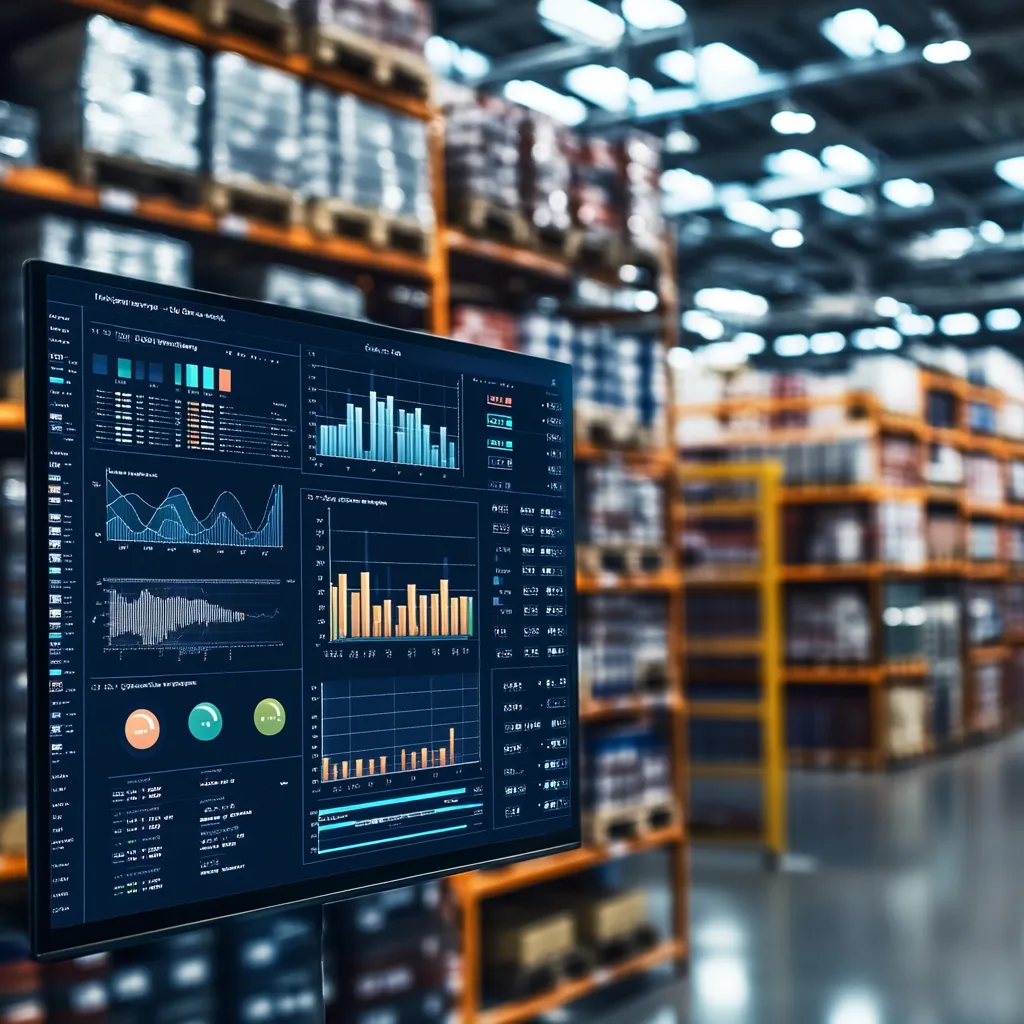
The human-facing side of the platform gave decision-makers the clarity they needed — current market conditions, trading strategy performance, inventory risk levels, and notifications about anomalies or opportunities. It didn’t just show data. It told a story — highlighting what mattered most and guiding users to take action.
The result
The platform gave the company better market visibility than any competitor, automated critical decisions, and unlocked new revenue streams — including the potential to monetize insights, analytics, and derivative financial instruments to other market participants. It transformed how the business thought, acted, and competed.